There's a boy...
The Squeaky Wheel

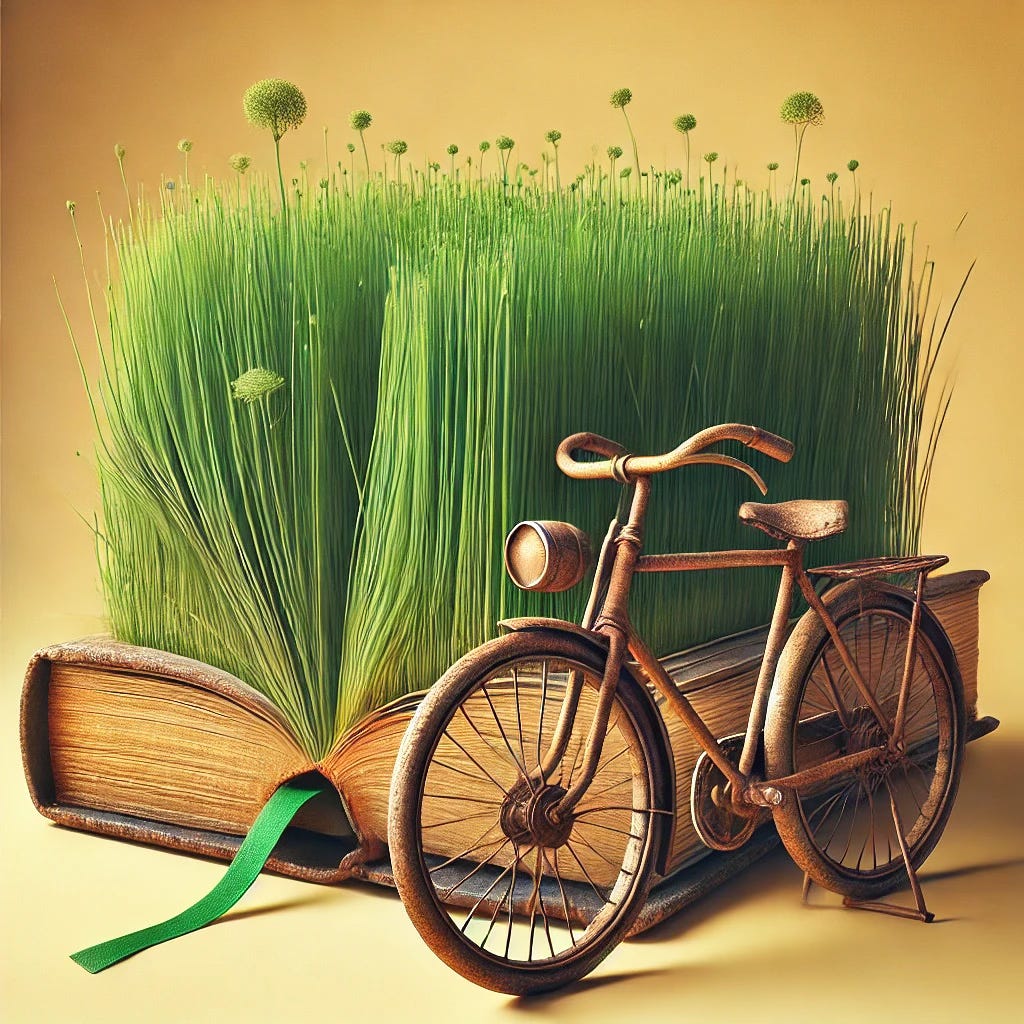
There’s a boy I still see in my mind. He’s sitting cross-legged on the carpet in a small house in a small town. The TV hums somewhere in the background. The adults are busy fighting battles he can’t name. He has already learned to shrink himself, to stay out of the way, to read the room more than he reads the books in front of him. When I think of that boy now, I don’t see innocence. I see awareness - too much of it for a child. I see a boy who already understood that moods in a room can shift like weather and that survival often depends on anticipating the next storm. I see a boy who would grow into a man who mistook vigilance for virtue and anxiety for responsibility.
The feeling I remember most from those years isn’t rage or even sadness. It’s loneliness.
A loneliness so dense it seemed to bend the air. A loneliness that made me believe there must be something wrong with me for feeling it at all. The science has a language for this.
Antonio Damasio writes: “Much of each brain’s circuitry at any moment in adult life is individual and unique, truly reflective of that particular organism’s history and circumstances.” We like to imagine we are born as blank pages. We aren’t. We are a kind of ongoing draft. Every small neglect, every small kindness, every laugh at the wrong time, every night we went to sleep afraid - all of it leaves a trace in the wiring.
I didn’t know that then. I thought I was simply flawed. I thought the feelings that woke me in the night, the dread in my stomach on Monday mornings, the way I stared at catalogues wishing I were someone else, were proof of a fault deep inside me. It took decades to see what Damasio describes: that a life isn’t shaped only from the inside out but also from the outside in - by the history and circumstances we inherit and endure.
When I write about my childhood, I don’t want to offer it as tragedy. There was laughter. There were good people. There were pockets of safety. But the prolonged exposure to fear, shame and loneliness carved grooves that later became channels for anxiety and, in time, bouts of depression. This isn’t a revelation anymore. We live in an age where anxiety is a headline, a hashtag, a thing we diagnose and medicate. But there is still a way we talk about it - or perhaps, a way we frame it - that I think misses something essential. Too often we treat distress as if it lives only in the individual. We imagine there is something inside us that needs to be corrected, a fault in our personal wiring. We turn to experts to fix it. We assume the solution lies in the right chemical, the right technique, the right new thought. I don’t dismiss any of that. I have sought all of it myself. But it is not the whole picture.
Much of what made me anxious was not a disorder lodged in my brain. It was a reaction to the world I grew up in - to the instability in my family, to the blows I couldn’t dodge, to the absence of steady models to learn from, to the cuts that came not as a single wound but as a thousand small ones that taught me I was not safe. If we never name that, we risk teaching people that the pain they feel is their personal defect, not also the scar of what they’ve endured. I didn’t understand any of this as a boy. I simply absorbed it. I learned to perform instead of trust.
I learned to find safety in making others laugh. I learned to drink to quiet the static in my head.
By my thirties, I had become someone I barely recognised - clever enough to succeed, hungry enough to keep going, hollow enough to feel nothing but the urge to escape.
That’s when the anxiety hardened. That’s when depression stopped being a passing mood and became a recurring season. That’s when I began to wonder if the world would be better off without me in it. And that’s why I began to write. Not because I thought my story was special but because I didn’t know what else to do with it.
John W Price once wrote: “Our deepest suffering is penetrated on some level by people willing to witness and connect with the depths of our darkness.” I think that line might explain why I kept going. For years I waited for someone to save me - a teacher, a friend, a partner, a guru, a God. None came. What finally helped was not rescue but witness: a handful of people, some professionals, some not, who sat with me long enough to say in their presence, if not in words: I see you. You are not alone. This hurt is not all that you are.
Carl Rogers believed that real change begins not in being fixed, but in being fully seen. “When someone really hears you without passing judgment on you, without trying to take responsibility for you, without trying to mould you, it feels damn good.” That kind of witness isn’t soft - it’s alchemy. It’s how pain becomes something we can hold without drowning in it.
This book is, in a way, a continuation of that witness. An invitation to look at the pattern of a life not as a spectacle, not as a cautionary tale, but as evidence of how a human being is shaped - and how a human being can keep reshaping. The pages that follow are not a single tidy memoir.
They are a collection of essays - testimony of the boy I was and the man I became; reflections from the therapists who helped me understand how I got here; and, in the final part, the practices and perspectives I’ve tried to build, not as prescriptions but as offerings, scraps of hope. I share them not because I think my path is one to imitate. I share them because the forces that shaped me - the small humiliations, the disconnections, the moments of unlooked-for kindness, the stubborn will to begin again, are not mine alone. We all carry some version of them. We all inherit histories and circumstances we did not choose.
And we all must learn, sooner or later, that the story we live with is not fixed - that we can keep revising it.
If there is a single thread I hope you feel running through these pages, it is that what you feel now is not who you are. It is what has happened to you. And because of that, it can keep changing. Suffering is not a private defect. It is often the echo of environments, of losses and absences and cruelties that might not have been named. Naming them matters. So does refusing to be defined by them.
In these essays you will meet the child I was, the man I became, and the witnesses, the friends, the therapists, the ideas - that helped me understand both.
If you find anything here that helps, I hope it’s the sense that by looking honestly at what shaped us, we can start, little by little, to shape ourselves. Not into some fixed idea of a perfect self.
But into a self that is still growing. A self that can keep becoming.
I can relate. I did that very same thing - get stressed out because there was no kiss at the end of some of the emails I received. I remember the panic. This is well written and expresses it as I lived it.
It is scary as hell and also raw empowerment that our nervous system is wired the way it is. Keeping us safe. And we have no clue because no one talks about how the body actually processes every moment. I was talking about this with a few people but we only know what our families introduced to us. Then when we get older it's what we introduce to ourselves. I just wanted to share that thought with you. I also want you to know that I am so damn proud of you! Glow Bright Flame My Friend.